
Friday Leadership Report | Alan Kearns, Founder & Managing Partner, CareerJoy
Happy Friday,
I have loved flying for as long as I can remember. It was one of the quiet gifts my parents gave me, the adventure of travel. As an only child, I got to see a good chunk of the world before most kids my age had left their province. But honestly, some of my favourite moments happened before we ever reached the destination.
I still remember my first time on a 747, watching the little screen in the seatback track our descent, the runway growing on the map until the wheels touched down.
That memory came back this past week after the Air Canada flight that went off the runway landing in Montreal. I follow these stories more closely than most people do. My son is a first officer with WestJet, based in Vancouver, and if you talk to anyone in aviation, they will tell you the same thing: takeoff and landing are where the real risk lives. Cruising altitude is the easy part. It’s the first and last few minutes of a flight that demand everything a pilot has.
So this week sent me down a research rabbit hole, and I found something that stopped me. It turns out that chasing a smooth landing, the kind that makes passengers clap, is often the very thing that causes accidents.
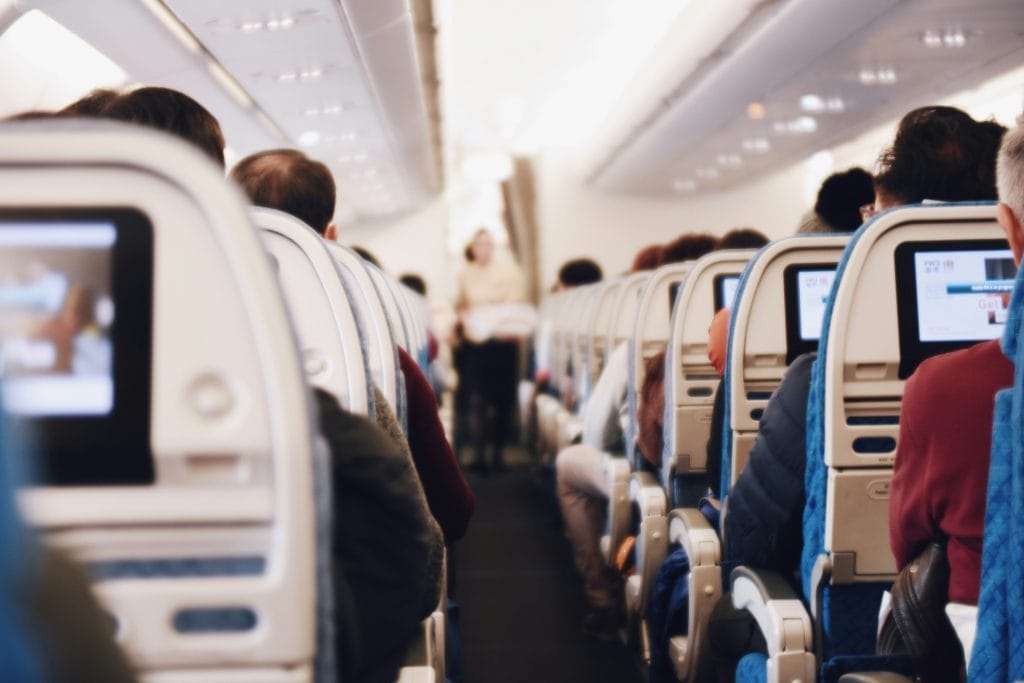
Most passengers judge a flight by two things: how the captain sounds on the PA, and how gently the plane sets down. Andrew McKechnie, a former British Airways captain who now runs his own aviation consultancy, says that instinct is misleading.
“From a safety standpoint, the best landing isn’t the softest one. It’s the one where the aircraft touches down at the right spot on the runway, at the right speed.”
Chasing that buttery smooth touchdown can actually push a pilot to float too far down the runway before setting the wheels down, or to flare too aggressively and risk a tail strike. In wet conditions, that extra float can be the difference between stopping safely and sliding off the end of the tarmac.
Read that again, because it is not intuitive.
The outcome everyone applauds, the smooth landing, is sometimes the by-product of a decision that quietly increases risk. Meanwhile, the landing that feels like a small thump is often the one that was flown correctly.
I think about this constantly in leadership work. How many of us are managing for the applause instead of the outcome?
The team member who never pushes back, who agrees in every meeting, who makes every interaction feel smooth, can look like your best player. But smoothness and safety are not the same thing. The people who tell you what you want to hear are not always the people you can trust with what actually matters.
The colleague who raises the uncomfortable question, who flags the risk nobody wants to name, is often doing the harder and more valuable work, even though the meeting feels bumpier because of it.
There is a second layer to this story that I think matters even more for how we lead.
Captain Chris Eades, who spent decades training pilots, shared that the best captains he flew with were the ones who gave their first officers real room to make their own calls, including the freedom to occasionally get it wrong and learn from it in real time.
One captain described a first officer misreading the landmarks on descent into Edinburgh, confidently announcing the wrong hill as their position marker. Rather than jumping in to correct him immediately, the senior captain let the moment play out, then calmly walked him through it once the mistake became obvious.
The first officer has said that single moment taught him more than a dozen textbook corrections would have.
That is not how most of us were taught to lead. Most of us were taught that the mark of a good manager is catching the error before it happens. But there is a cost to that instinct. When we intervene too early, every time, we do not just fix the mistake, we quietly teach our people to stop trusting their own judgment. We train dependence instead of capability.
The best leaders I know, and the best pilots by every account I have read this week, understand the difference between a mistake that is dangerous and a mistake that is instructive. Letting the second kind happen, inside a safe enough margin, is not weak leadership. It might be the most respectful thing you can do for someone’s growth.
This is where the runway metaphor lands squarely on the desk of every Canadian manager.
Most performance conversations still default to comfort metrics. Did they show up on time. Did they follow the process. Did they make the meeting feel easy. Those are the equivalent of judging a flight by how smooth the touchdown felt. They tell you almost nothing about whether the person is actually navigating well.
Gallup’s ongoing workplace research has found that managers alone account for roughly seventy percent of the variance in how engaged their teams are, and that employees who genuinely trust their leadership are dramatically more likely to stay and to bring their full effort to the work.
Trust, not compliance, is the variable doing the heavy lifting. A team member who is technically compliant but emotionally checked out, who never tells you what they actually think, is not a stable landing. They are a smooth touchdown that happened to work out this time
We see this same pattern in The 2025 Work. Made Better. Report. Across the Canadian organizations we studied, the healthiest teams were rarely the quietest ones. They were the teams where people felt safe enough to disagree with a leader without fear of being sidelined for it.
The report kept surfacing the same uncomfortable truth: leaders often mistake harmony for health, when what they are actually looking at is silence. And silence, like a landing that only looks smooth from the cabin, can be hiding a problem that surfaces later, often at a much higher cost.
The Canadian workplaces bucking this trend share a common trait. Their leaders built systems where dissent was treated as data, not disloyalty. They rewarded the people who spoke up early, even when the message was inconvenient, because catching the problem on approach is always cheaper than dealing with it after the wheels are down.
This is precisely what [LQ] Leadership Intelligence is built to measure. Not how smoothly a leader sounds on the PA, but how they actually perform in the moments that carry the most risk, the decisions on approach, the willingness to let someone else fly, the discipline to reward accurate feedback over easy agreement. A leader with a strong [LQ] does not need every landing to feel effortless. They need every landing to be safe, and they need their people to trust them enough to say so when it isn’t.
The next time a member of your team pushes back on you, or admits a mistake before you catch it, resist the urge to see that as turbulence. That is often the sound of the plane being flown correctly.
If you are curious where your own leadership tendencies sit on this spectrum, that is exactly the kind of conversation my team at CareerJoy exists to have with Canadian leaders.

Along the road with you,
Alan
The smoothest team isn’t always the healthiest one. If you’re not sure whether your team feels safe enough to disagree with you, that’s worth a conversation.
The instinct to jump in early often builds dependence, not capability. If that sounds familiar, let’s talk.