
Friday Leadership Report | Alan Kearns, Founder & Managing Partner, CareerJoy
Happy Friday,
I grew up in a house where my mother was the strongest voice in the room, and my father spent decades making sure everyone else knew it too. He was not threatened by her ambition. He championed it, professionally and personally, out loud and often. That was the model of leadership I inherited before I ever coached a single client.
Last week the world lost Gloria Steinem, one of the defining leaders of the feminist movement, at 92. I will admit I did not know her full story as well as I should have. Reading her biography this week, what struck me was how ordinary her starting point was. No Ivy League pedigree. No early privilege, economic or academic. Her breakthrough did not arrive as a single dramatic moment. It arrived one step in front of the other.
In 1968, an editor named Clay Felker hired her at New York magazine. Covering an abortion speak-out in Greenwich Village, she coined the phrase “reproductive freedom.” She had had an abortion herself in London at 22, and she later described that day in the Village as a turning point, a moment she called her “big click,” the start of her life as an active feminist. What she said about it stuck with me. She described it as the first time she took full responsibility for her own life, rather than letting things happen to her.
That is the sentence I want to sit with this Friday. Not the politics of the moment. The decision underneath it. She chose to direct her own life instead of letting it be directed for her. That is the same decision my mother made a generation earlier in her own career, and it is the same decision every leader I coach eventually has to make, regardless of what field they are in or what year they were born.
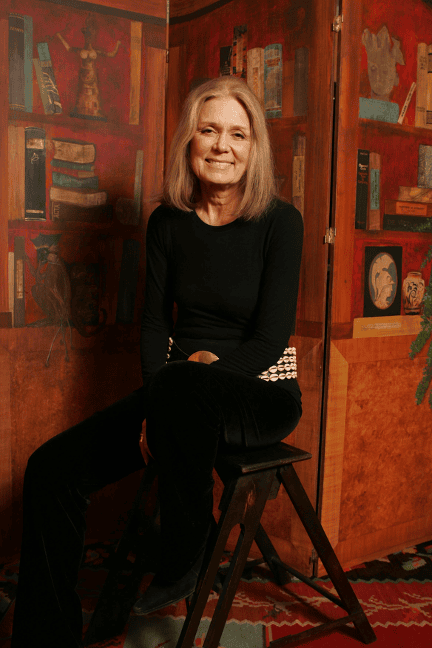
Steinem and women like my mother were generationally ahead of their time. They laid the foundation for a professional landscape that looks entirely different today. Statistics Canada released new data this March showing women now hold 23.2 percent of board director seats and 21.7 percent of top officer roles at Canadian corporations, both figures climbing steadily since 2016. The Federation of Law Societies of Canada reports that more than half of Canadian law school graduates are now women, and women make up the majority of lawyers with five years or less in practice. The Canadian Medical Association’s own data shows more than 40 percent of practising physicians in Canada are women, with well over half of current medical students being women.
Here is the part worth noticing. The entry points have opened wide. The senior ranks are still catching up. Women dominate the front door of these professions and remain underrepresented at the top of them. That gap is not evidence the work is finished. It is evidence of exactly how long foundational change takes to move through a system, and why the generation that broke the door open matters so much to the generation now walking through it.
The same pattern that reshaped law offices and hospital wards has now crossed fully into sport. The PWHL just closed its third regular season having drawn over 1.1 million fans across 120 games, an average of more than 9,300 fans per night, up 28 percent over the previous season and 71 percent over its inaugural year. Toronto, Ottawa, Montreal, and Vancouver anchor a league that did not exist three years ago and is now setting attendance records in NHL arenas.
That growth did not happen because women’s hockey suddenly became good. It happened because the infrastructure, the investment, and the belief finally caught up to talent that had always been there. Basketball and soccer are following the same arc globally. This is not a niche trend. It is what happens whenever a system finally makes room for capability that was already present.
This week’s [LQ] question
At CareerJoy, we track this same pattern in our coaching work, captured over the years in the Work. Made Better. Report. The leaders who move fastest, regardless of gender, are rarely the ones waiting for permission or perfect circumstances. They are the ones who make an early, deliberate decision to stop letting their career happen to them and start directing it. That is the throughline from Steinem’s Greenwich Village moment to the leader in your own organization who finally stopped waiting to be noticed and started building the case for themselves. Self-direction is not a personality trait some leaders are born with. It is a decision, available to anyone, at any point in a career.
The question worth carrying into your weekend is simple. Where in your own leadership are you still waiting for something to happen to you, when the more honest move would be to direct it yourself?
Activism, like leadership, is rarely won in a single dramatic act. It is won chapter by chapter, through patient, brilliant work driven by passion and a clear sense of justice, far more than by anger. Steinem understood that. So did my mother. So, I suspect, do many of the leaders reading this.

Along the road with you,
Alan
Get a first look at the 2026 Work. Made Better. Report, exploring what helps people take ownership of their careers, lead with intention, and create workplaces where others can do the same.
Great leadership starts with the willingness to act, create clarity, and make things happen, even when the path isn’t perfectly clear. Explore CareerJoy’s leadership solutions for practical support in building stronger leaders and teams.