
Friday Leadership Report | Alan Kearns, Founder & Managing Partner, CareerJoy
Happy Friday,
Like over a billion people around the planet, our house was glued to the World Cup Final last weekend. We had our cottage neighbours over, snacks everywhere, kids running between the dock and the couch every time a whistle blew. Spain beat Argentina 1-0 after extra time, with substitute Ferran Torres scoring the winner in the 106th minute, and the place erupted like we’d scored it ourselves. It was one of those nights you want to bottle. Good food, good neighbours, a game that actually delivered.
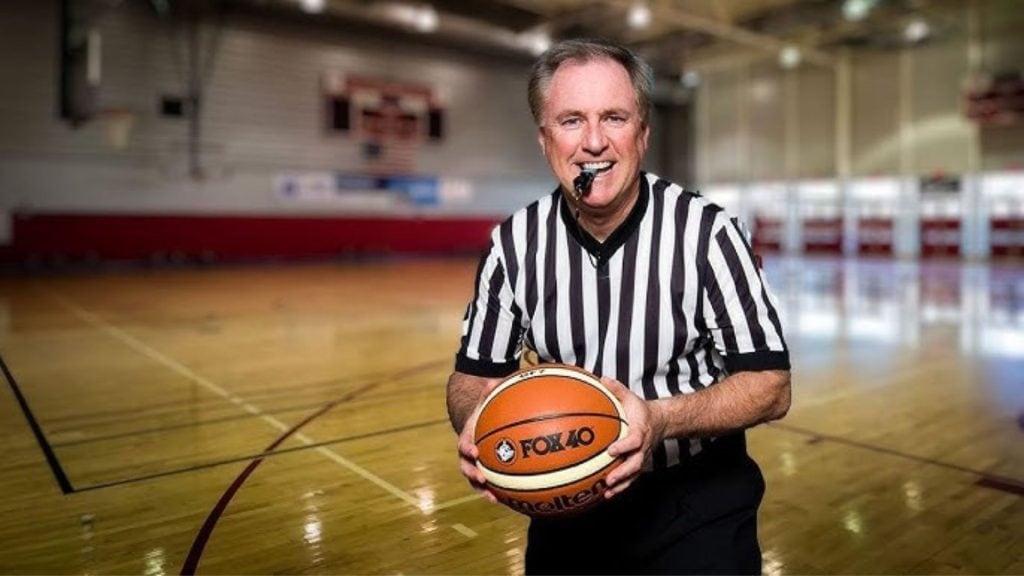
Somewhere around the second half, one of our neighbours mentioned something I had no idea about. Every time that referee’s whistle cut through the noise, we were hearing a Canadian invention.
The Fox 40, the pealess whistle used in nearly every major sport on earth, was invented by Ron Foxcroft, a referee from Hamilton, Ontario. Foxcroft officiated the men’s Olympic gold medal basketball game in Montreal in 1976, and the whistle he was using that night had a small cork pea inside it, the traditional design at the time. Peas jam. When they jam, the whistle goes silent at exactly the moment it matters most.
Years later, working a pre-Olympic game in Sao Paulo, Foxcroft blew his whistle on a foul at centre court and nothing came out. The pea had stuck. Play continued, the crowd erupted, and things nearly turned ugly around him. That was the moment he decided enough was enough. Not because he saw a business opportunity. Because he was tired of being the guy standing there with a silent whistle in his hand.
Here’s the part I keep coming back to. Foxcroft wasn’t trying to build a global whistle empire. He made a wish list of features for a better whistle and brought it to a small plastics moulding shop in Ontario to see if they could build what he’d sketched. He was solving his own problem. The whistle now used by the NFL, NBA, NHL, FIFA, and dozens of other organizations worldwide started as one frustrated referee fixing the thing that kept failing him personally.
I see a version of this mistake constantly in my coaching work. Leaders reach for the big strategy. The five year vision. The transformation initiative with a consultant deck and a catchy name. Meanwhile, the actual thing breaking their team’s performance is sitting three feet in front of them, unaddressed, because it feels too small to be worth a leader’s attention.
New research on Canadian workplaces backs this up in a way that surprised me. HRD Canada’s Best Places to Work survey found that almost half of employees at Canada’s top rated employers were not formally asked for their views in the past year, and that figure runs considerably higher across Canadian employers more broadly. Think about that. These are the good employers, the ones making the lists, and still close to half their people haven’t been asked what’s actually going wrong on the ground.
The AI conversation is showing the same pattern from a different angle. BCG’s global AI at Work research found that while more than three quarters of leaders and managers now use generative AI regularly, frontline employee usage has stalled well below that. The gap isn’t a tools problem. It’s a leadership attention problem. BCG’s data shows positive sentiment toward AI among frontline employees rising from 15 percent to 55 percent when leadership support is strong, yet only a quarter of frontline employees currently experience that level of support from their leaders.
In both cases, the fix isn’t a bigger vision. It’s a leader deciding to notice the pea stuck in the whistle.
There’s a reason Foxcroft’s story lands the way it does. He didn’t set out to change officiating worldwide. He set out to never again stand silent and humiliated in front of a packed arena because a two dollar part failed him. The global impact was a byproduct of solving a real, specific, personal frustration well.
Leadership works the same way, in my experience. The leaders who build real trust with their teams aren’t the ones chasing the grandest possible mandate. They’re the ones who notice that one recurring complaint, that one broken handoff between departments, that one meeting where good people go quiet, and they actually fix it. Not because it will look impressive on a slide. Because it’s the thing standing in the way of their people doing good work.
That’s a harder discipline than it sounds. Big vision work is genuinely more comfortable for a lot of leaders. It’s abstract, it’s future focused, and nobody can accuse you of having missed the mark yet. Fixing the specific, present, unglamorous problem in front of you requires admitting something is broken right now, on your watch, and that you’re the one who has to deal with it.
This doesn’t require a new program or a survey nobody will fill out honestly. It starts smaller than that. Ask one person on your team, this week, what’s the one thing that keeps slowing them down that nobody higher up seems to notice. Then actually fix that one thing, visibly, before you move on to anything else.
Foxcroft didn’t start with a market study. He started with a wish list, a plastics shop down the road, and a specific, personal irritation he refused to keep living with. Most of the real fixes I’ve seen leaders make in organizations started the same way. Small, local, unglamorous, and completely solvable once someone with authority actually decided to pay attention to it instead of stepping over it on the way to the next big initiative.
The pattern holds whether you’re running a five person team or a national organization. Vision matters. But vision without the discipline of noticing what’s actually broken in front of you is just a nicer way of ignoring your people.
This is exactly why presence sits inside [LQ] as one of the traits I coach leaders on directly. Not vision. Not charisma. The discipline of actually seeing what’s happening in the room you’re standing in, rather than the room you wish you were leading instead. Leaders with high [LQ] don’t ignore the small, local, unglamorous problem because it feels beneath their title. They treat it as the whole job.
Foxcroft eventually built a company that sells whistles in over a hundred countries. But that came after the fix, not before it, and it came because he was still, first, a guy who wanted his own whistle to work.
This is the same lens we bring to our work with leaders and teams across Canada. Not another framework to memorize. A discipline of noticing the real, specific problem sitting in front of a leader right now, and building the capability to actually deal with it well. If your team has a pea stuck in the whistle somewhere, and you’re not sure where, that’s a conversation worth having.
Congratulations to Spain on a well earned title, and to every neighbour, cottage or otherwise, who made this an easy game to gather around.

Along the road with you,
Alan
Every team has them, a stuck complaint, a quiet handoff nobody fixed. The best leaders don’t wait for a bigger problem to justify their attention.
Foxcroft didn’t build a global company by thinking bigger. He built it by refusing to ignore what was broken right in front of him. Most leaders skip that step.